Car Tint Laws in Malaysia: A Beginner's Guide to JPJ Rules (2026)
Learn Malaysia car tint laws for 2026: JPJ VLT limits for front windscreen, side windows, and rear glass. Avoid fines and choose legal tint with confidence.
Driving with illegal window tint in Malaysia can mean fines, failed inspections, and the cost of stripping film off your car.
Understanding car tint laws in Malaysia is essential before you book any tinting job — this beginner's guide explains JPJ rules in plain language:.
JPJ tinted spec limits for private cars
what VLT means, which windows can be dark, and how to stay compliant in 2026.
Malaysian drivers often search for JPJ tint rules after seeing roadblock checks or friends getting summons.
The rules themselves are straightforward once you understand visible light transmission (VLT).
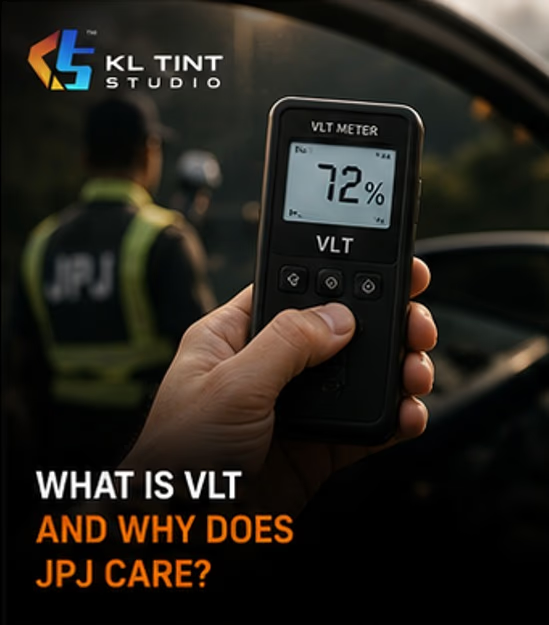
What is VLT and why does JPJ care?
Visible Light Transmission (VLT) measures how much light passes through your glass and film combined. Higher VLT means lighter tint; lower VLT means darker tint.
JPJ sets minimum VLT on front glass so drivers maintain adequate visibility — especially at night, in rain,.
and during dawn glare on highways like the NKVE and Kesas.
Your installer should quote VLT after installation, not just the film roll rating on the box.
Legal VLT limits for private passenger cars
These limits match KL Tint Studio's JPJ tinted spec page and apply to typical private saloons, hatchbacks, SUVs, and MPVs:
Window | Minimum VLT | Notes |
|---|---|---|
Front windscreen | 70% | Darker not allowed without JPJ approval |
Front side windows | 50% | Driver and front passenger |
Rear side windows | No minimum | Darker shades permitted |
Rear windscreen | No minimum | Darker shades permitted |
Commercial vehicles, buses, and motorcycles follow different rules — confirm with JPJ if your vehicle class is not a private passenger car.
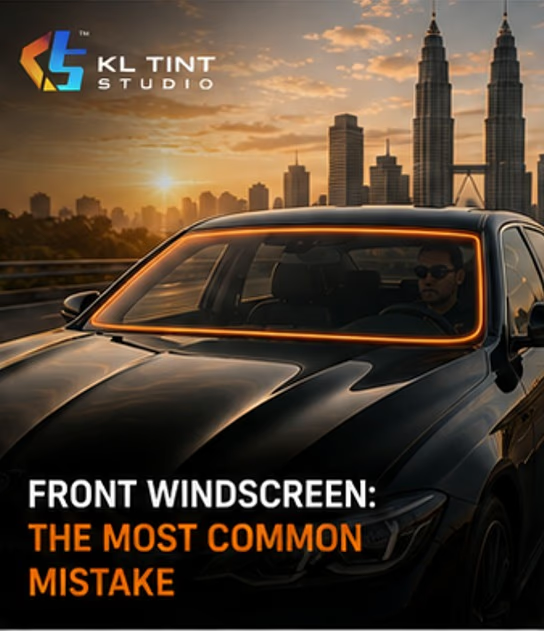
Front windscreen: the most common mistake
Many owners want a “jet black” windscreen for aesthetics.
Under current legal tint Malaysia standards for private cars, that is not allowed on the front windscreen.
What you can do legally:
- Install 70% VLT or lighter on the front windscreen for UV and heat benefits while staying visible
- Use darker ceramic or sputter films on rear glass for privacy
- Choose high-performance films that reject heat without breaking VLT rules — see nano ceramic vs regular tint
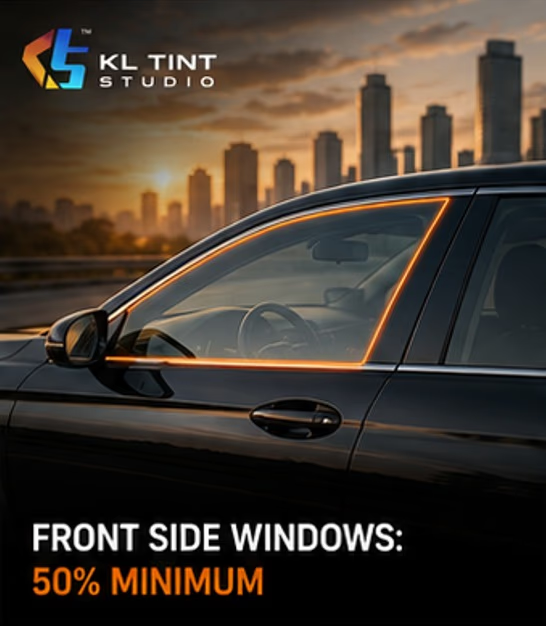
Front side windows: 50% minimum
The 50% front-side rule catches owners who match their rear 15% or 5% shade on front doors.
Enforcement teams routinely check this at roadblocks in Selangor, KL, and major highways.
When booking tint, specify:
- Exact VLT target per window
- Whether the shop guarantees JPJ-compliant front shades
- Written quote or invoice listing film grade and VLT
Rear glass: where darker tint is allowed
Rear side windows and the rear windscreen may use darker films — including popular 30%, 15%, and 5% shades —.
because JPJ does not set a minimum VLT there for private cars.
This is why Malaysian cars often look light at the front and dark at the rear.
It is a legal and practical compromise: compliance where visibility matters most, privacy where it does not.
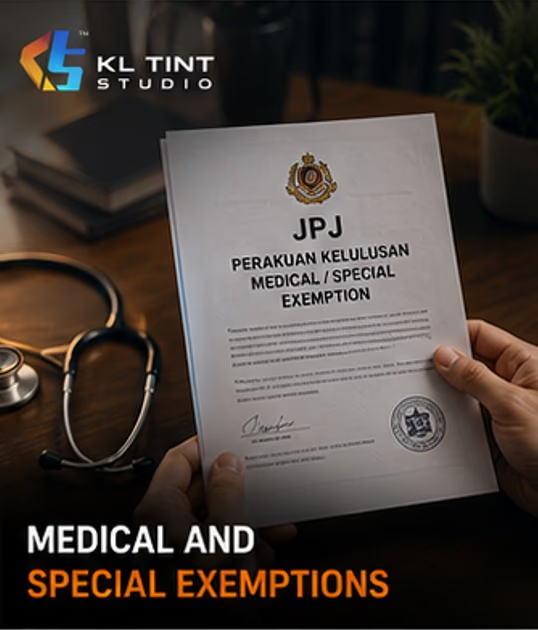
Medical and special exemptions
Some drivers believe a shop letter alone allows darker front tint. Medical or special exemptions require official JPJ approval — not installer discretion.
If you believe you qualify:
- Follow JPJ's current application process
- Keep approval documents in the vehicle
- Do not install illegal front shades while waiting unless JPJ explicitly permits interim use
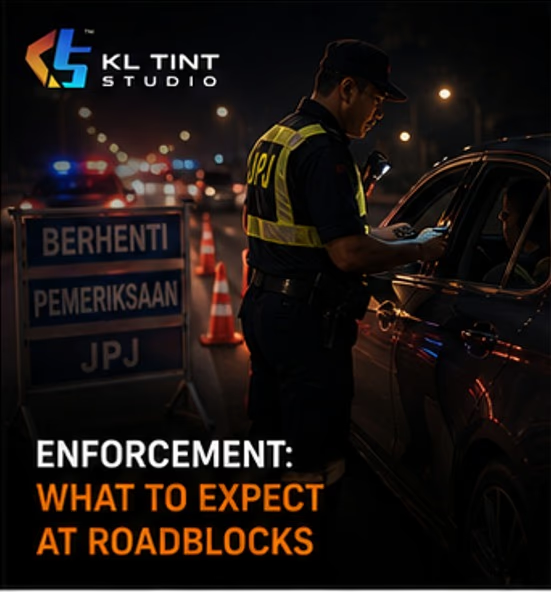
Enforcement: what to expect at roadblocks
JPJ and traffic enforcement may use handheld tint meters. Officers compare readings against legal limits. Common outcomes for non-compliant tint:
- Compound or summons
- Order to remove tint within a timeframe
- Issues during Puspakom or inspection processes in some cases
Keep your tint invoice and film specifications. Reputable shops document VLT for warranty and compliance reference.
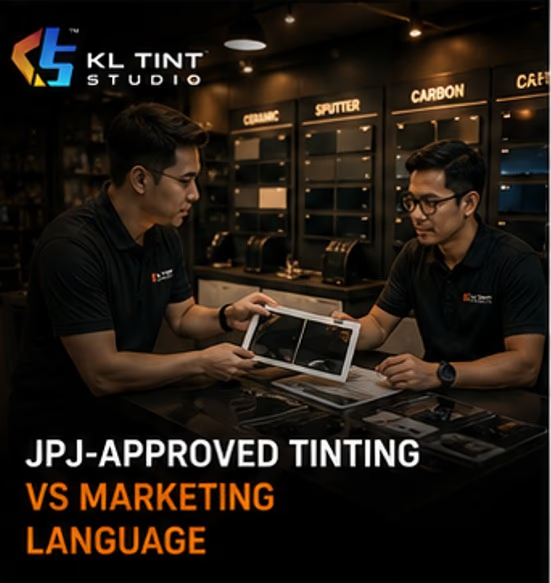
JPJ-approved tinting vs marketing language
JPJ approved tinting” on a banner does not replace correct VLT installation.
Approved film brands still become illegal if the wrong shade is applied to front glass.
Questions to ask your kedai tinted:
1. What VLT will my front windscreen read after install?
2. Is this film non-metallic if I use RFID or GPS daily?
3. What is the warranty if bubbling occurs on defroster lines?
4. Can you show sample cards at 70% and 50%?
Our how to choose car tint Malaysia guide includes a full pre-install checklist.
Tint types and the law
JPJ regulates how much light passes through, not the marketing name of the film.
Nano ceramic, sputter, carbon, and dyed films can all be legal or illegal depending on installed VLT.
Performance-focused owners should also understand heat rejection testing — marketing IRR percentages do not override VLT law.
Read IRR testing in Malaysia to separate heat specs from compliance.
Choosing compliant tint without sacrificing comfort
You do not need illegal tint to stay cool.
Modern nano ceramic films reject infrared heat while maintaining 70% front VLT.
Premium packages balance comfort and JPJ rules — browse options on our [tint page](/tint).
Typical legal setup for Malaysian daily drivers:
- 70% front windscreen — heat and UV reduction, fully compliant
- 50% front sides — privacy without roadblock risk
- 15–30%** rear sides and rear screen — stronger privacy and heat gain reduction
Discuss your commute, parking, and family needs with the installer before finalising shades.
Aftermarket tint vs older cars
Re-tinting after an accident or peel job?
Ensure old adhesive is fully removed before new film is applied.
Layered film can cause meter readings to fail even when new film is labelled compliant.
If you buy a used car, verify tint legality before long highway trips — replacing illegal front tint is cheaper than repeated summons.
Common myths about car tint laws
Myth: “My shop said this tint is JPJ approved, so any darkness is fine.”
Reality: Approval of film brand does not override VLT limits on front glass.
Myth: “Police never check rear tint.”
Reality: Front side and windscreen are the primary enforcement focus — but illegal front tint is a clear summons risk.
Myth: “Ceramic tint is automatically legal.”
Reality: Ceramic film can be installed illegally if the shade is too dark on front windows.
Myth: “I can remove tint before inspection and reapply later.”
Reality: This wastes money; install compliant shades once with a reputable shop.
Window tint and insurance / resale
Illegal tint may complicate vehicle handover or inspection during sale.
Buyers increasingly ask about JPJ compliance.
Keeping front glass legal protects resale value and avoids last-minute removal costs before transfer.
Car tint laws in Malaysia protect visibility on front glass while allowing privacy at the rear.
Remember 70% front windscreen, 50% front sides, and darker rear where permitted.
Choose a shop that documents VLT, uses quality film, and stands behind warranty.
Need JPJ-compliant installation? View our JPJ tinted spec reference and book tint installationat KL Tint Studio.
1. Q: What is the legal tint limit for front windscreen in Malaysia?
2. Q: How dark can front side windows be under JPJ rules?
3. Q: Can I tint my rear windows darker than the front?
4. Q: Is 5% VLT legal anywhere on a private car in Malaysia?
5. Q: What happens if my tint is illegal?
6. Q: Where can I see JPJ-compliant tint packages?
Related searches people use include jpj tinted specification, malaysia car tint rules, malaysia car tint regulation, tinted kereta spec jpj. Use those terms when comparing quotes so shops know exactly what you need.
For next steps, see tint packages, book an appointment, or car tint Malaysia guide.