The Science Behind Nano Ceramic Coating: How It Protects Your Car’s Surface
How nano ceramic coating works: SiO2 bonding, layers, hydrophobics, UV resistance, and what it does — and does not — protect on Malaysian cars in 2026.
Nano ceramic coating science sounds like marketing jargon until you understand what actually sits on your clear coat.
In Malaysia, shops from Shah Alam to Cheras sell “nano ceramic” packages at wildly different prices.
Some deliver a durable silica bond; others are little more than a short-lived sealant with a buzzword label.
Knowing how the chemistry works helps you buy protection that matches Malaysian UV, heat, and rain —.
and avoid expecting coating to do a job that only PPF can do.
This guide explains how nano ceramic coating bonds, what the layers do, what it protects, and what it does not.
Use it before you compare ceramic vs graphene or stack coating with film.
Quick answer: what nano ceramic coating really is
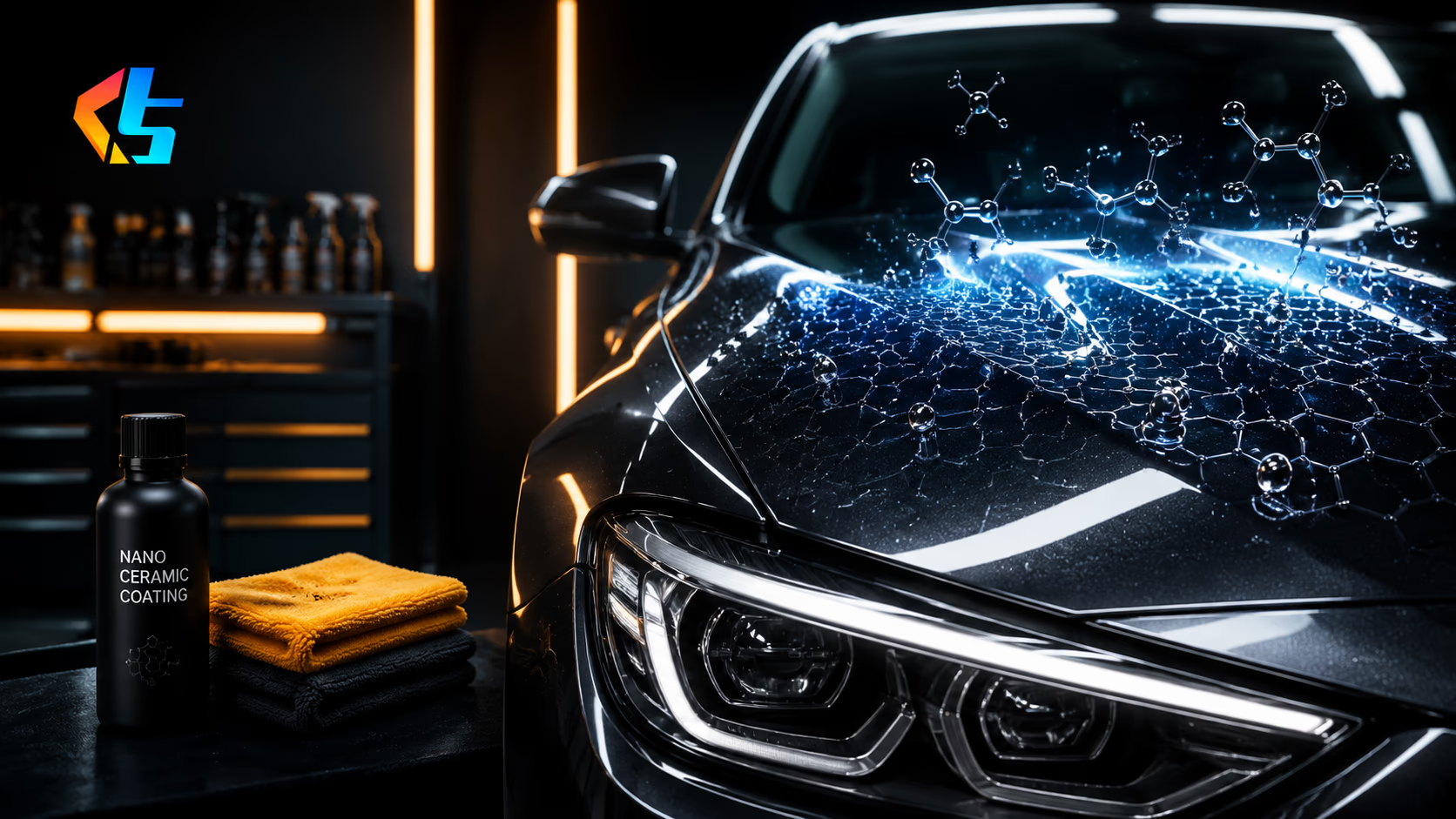
Nano ceramic coating is a liquid polymer system — typically silica (SiO2) based —.
that cross-links and bonds to factory clear coat after surface preparation and curing.
Once cured, it forms a thin, hard, hydrophobic shell measured in microns.
It improves chemical resistance, UV stability, and wash ease.
It does not add impact armour against stone chips.
Claim you hear | What science supports |
|---|---|
“Nano ceramic armour” | Chemical shell — not impact armour. |
“Lifetime protection” | Depends on product, prep, and wash habits. |
“Stops all scratches” | Light swirl resistance only; deep scratches still hit paint. |
“Better than PPF” | Different category — compare coating vs PPF. |
The SiO2 bonding idea (in plain English)
Factory paint ends with a clear coat.
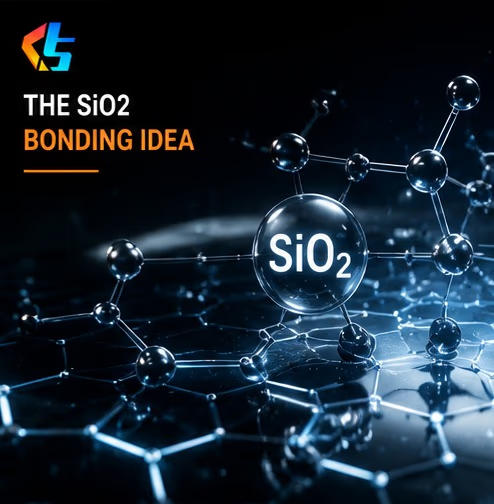
Ceramic coatings are designed to bond to that clear coat when the surface is clean, decontaminated, and often machine-polished first.
Many systems rely on silica (SiO2) or silica-hybrid resins.
After application, solvents evaporate and the resin cross-links into a dense network.
That network is why coated cars bead water and why bird droppings are easier to remove if you act quickly.
The coating fills microscopic texture and raises surface energy behaviour in a way that makes dirt release more easily than on bare clear coat.
Important caveats:
Bonding fails on oily, dusty, or poorly wiped panels.
Outdoor dusty yards reduce finish quality.
Coating over swirls locks defects under a glossy layer.
Paint correction is not optional theatre — it is part of the science working correctly.
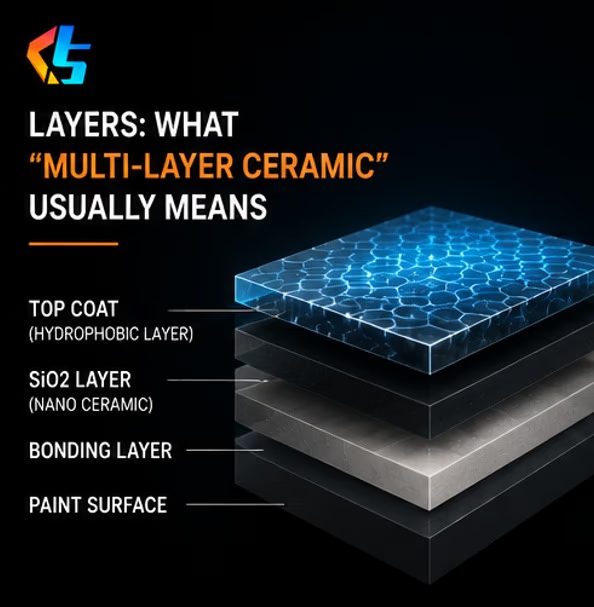
Layers: what “multi-layer ceramic” usually means
Shops advertise one-layer, two-layer, or three-layer nano ceramic packages. Layers can mean:
A base ceramic coat for hardness and UV resistance.
A second coat to build thickness and uniformity.
A topper for slickness and hydrophobics.
More layers only help when each layer is compatible, fully flashed, and applied in a controlled environment.
Three rushed layers outdoors can underperform one careful layer indoors.
Ask the installer:
Exact product brand and SKU.
Whether correction is included.
Cure time before rain and first wash.
What maintenance voids the warranty.
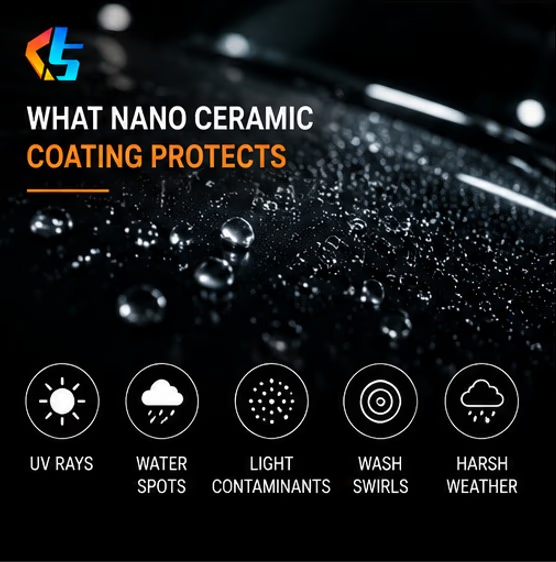
What nano ceramic coating protects
In Malaysian conditions, a quality coating helps with:
UV and fade resistance
Equatorial sun attacks roofs, bonnets, and horizontal panels.
Ceramic coatings add a UV-stable chemical barrier that slows clear-coat degradation compared with neglected bare paint.
It is not a total stop to ageing, but it slows fade and oxidation when the car is washed correctly.
Chemical etching (when cleaned promptly)
Bird droppings, tree sap, and industrial fallout etch clear coat if left baking in afternoon heat.
Hydrophobic coated surfaces make contaminants easier to lift with a detail spray and microfiber.
Speed still matters — overnight sap on a hot roof can still mark any finish.
Water spotting risk reduction (not elimination)
Tropical storms followed by open-sun drying leave mineral spots.
Coating makes water sheet or bead, which can reduce spotting if you dry the car.
Leaving a soaked car in direct sun after a storm can still spot coated paint.
Wash-induced swirl reduction (light)
A slicker surface collects less grit cling and rinses cleaner, so careful two-bucket washes create fewer new swirls.
Coating does not erase existing swirls and does not survive abrasive brush tunnels.
Gloss and depth
Owners often notice richer gloss on black, white, and metallic paints after correction plus coating.
That “wet look” is a real optical effect of a smooth, hard top layer.
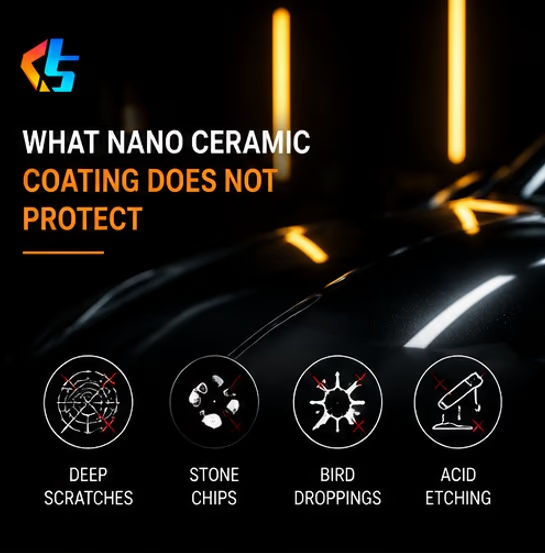
What nano ceramic coating does not protect
This is where many Malaysian buyers get disappointed.
Stone chips on PLUS highways and construction corridors — need PPF.
Deep key scratches — coating thickness is tiny versus film.
Bumper scrapes and kerb rash — physical film or repair.
Cabin heat — glass needs window tint, not paint coating.
JPJ tint compliance — unrelated; see /jpj-tinted-spec.
If your main fear is front-end chips on a new car, start with film coverage maps, then add coating for wash ease.
Read ceramic coating for scratches and fading for the scratch-vs-etch-vs-fade breakdown.
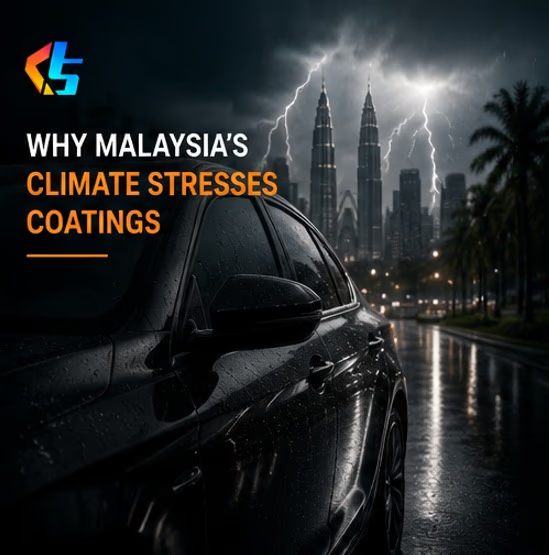
Why Malaysia’s climate stresses coatings
Malaysia combines:
Intense UV year-round
High humidity and monsoon rain
Acid rain and industrial fallout in urban corridors
Heat soak on dark paint in open mall parking
Frequent automatic brush washes that abrade coatings.
A coating that lasts five years in a temperate garage-kept climate may need closer maintenance here.
Treat warranty years as a ceiling, not a guarantee of zero maintenance.
Weekly or fortnightly gentle washes outperform monthly neglect plus one aggressive polish.
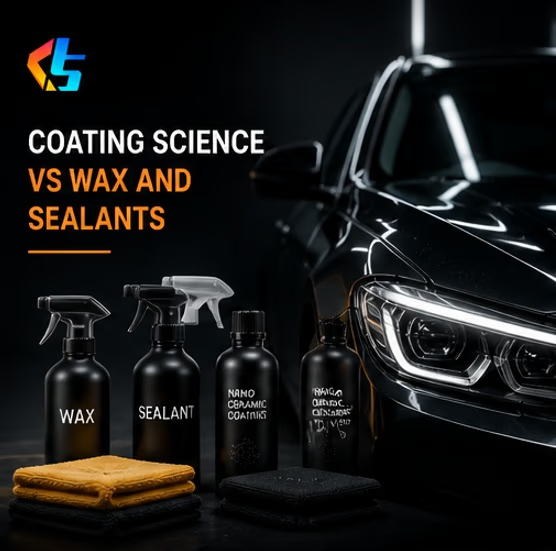
Coating science vs wax and sealants
Traditional wax is sacrificial oil/paste sitting on paint.
It looks great for weeks, then fades.
Polymer sealants last longer than wax but still sit largely as a removable layer.
Nano ceramic coatings are built to chemically bond and resist washing for years when prep and aftercare are correct.
That durability is why professional application costs more than a bay wax.
You are paying for correction labour, controlled application, and a longer chemical life — not just a bottle label.
Stacking coating with tint and PPF
A common 2026 Klang Valley stack for daily drivers:
Tint for cabin heat and UV through glass.
Partial or full-front PPF for chips.
Nano ceramic coating on paint and often over PPF for hydrophobics.
Coating over PPF is popular because filmed panels still collect dust.
Confirm product compatibility with your film brand.
Price context: tint, coating & PPF price guide.
Combo options: /combo.
How to judge “science claims” at a kedai
Ask for:
Product data sheet or brand warranty card.
Whether SiO2 percentage marketing is backed by application process.
Before/after correction photos on similar colours.
Written cure and wash instructions.
Honesty about chip protection limits.
If a seller says coating replaces PPF, walk away.
Categories differ.
Graphene-marketed products still need the same prep logic — compare options in ceramic vs graphene.
Maintenance that keeps the bond working
Observe the cure window before the first wash.
Use pH-neutral shampoo and soft mitts.
Remove droppings and sap quickly.
Avoid abrasive compounds unless the shop approves.
Skip brush tunnels when possible.
Refresh only with manufacturer-approved toppers.
Neglect turns a scientific coating into a dull, water-spotting surface that owners wrongly blame on “fake ceramic.”
Bottom line
Nano ceramic coating works by bonding a thin SiO2-based shell to clear coat, improving UV resistance, chemical resilience, gloss, and wash behaviour.
Layers and prep decide real results more than buzzwords.
In Malaysia’s heat and rain, coating is excellent chemical and UV support — not stone-chip armour.
Pair it with PPF when impact protection matters, and with tint when cabin heat is the pain point.
Ready to coat with honest expectations? Explore coating packages or book a consultation at KL Tint Studio.
Q: How does nano ceramic coating bond to paint?
Q: How many layers of ceramic coating do I need?
Q: Does nano ceramic coating stop stone chips?
Q: How long does nano ceramic coating last in Malaysia?
Q: Is ceramic coating the same as wax?
Q: Where can I get nano ceramic coating in Klang Valley?
Related searches people use include nano coating for cars, car coating, ceramic coating near me. Use those terms when comparing quotes so shops know exactly what you need.